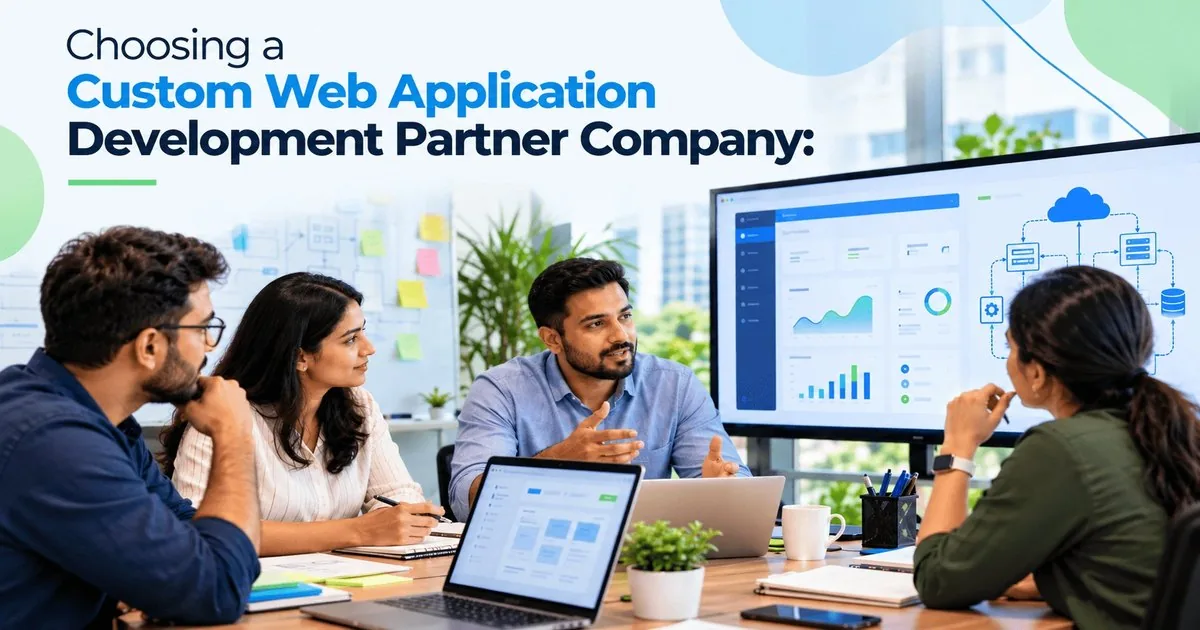
The right partner is a long-term technology partner, not just a vendor.
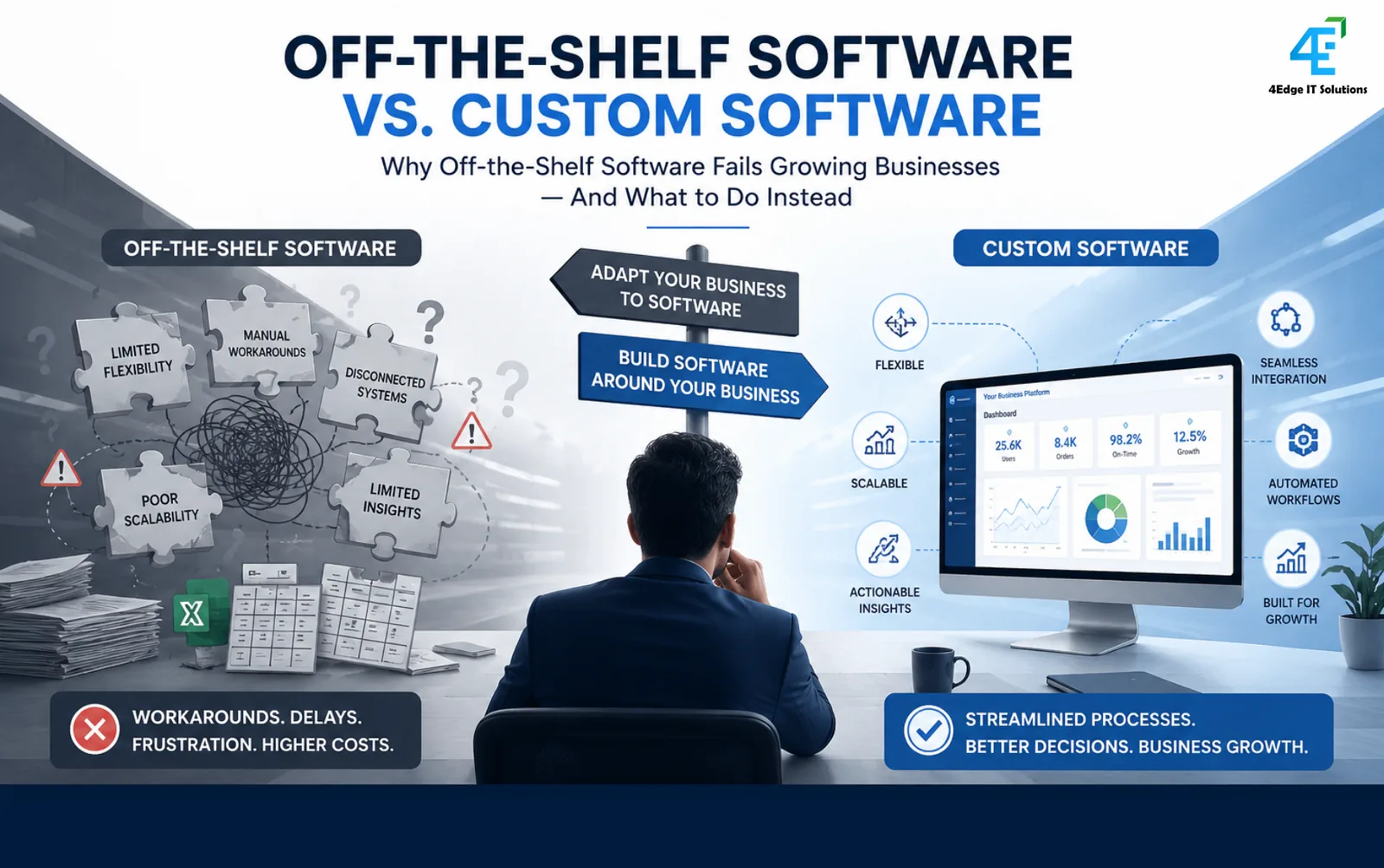
Choosing a partner for custom web application development projects is not really about choosing a technology vendor. It is about choosing a long-term technology partner.
Before proceeding with developing a custom web application, first thing that you need to do is to:
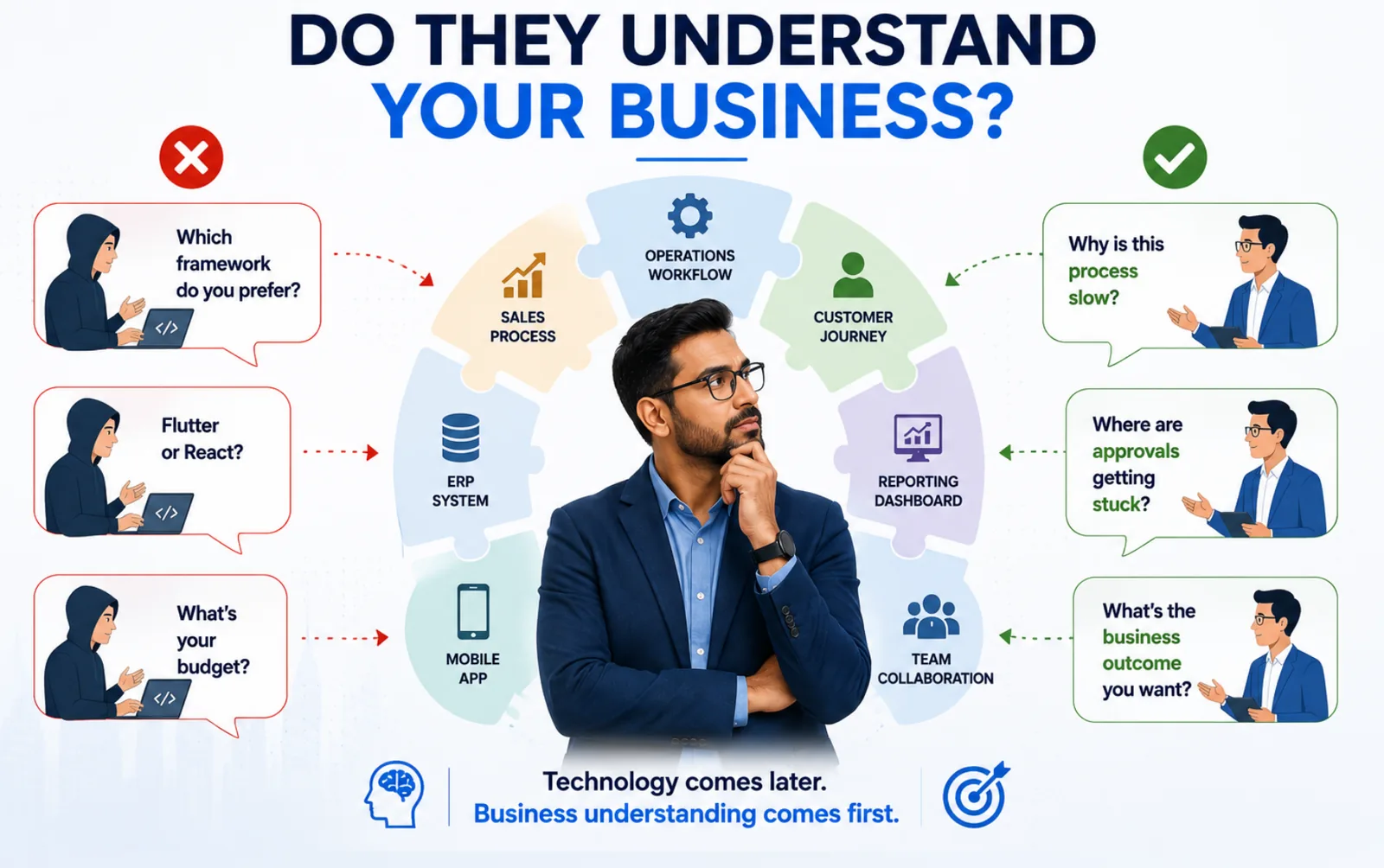
Start with the problem, not with technology.
Many clients tend to ask, “We need a progressive web app”, “We need a mobile app for …”, “We need a dashboard app”, and so on.
Instead, the first thing that needs to be asked should be, what is that business problem that I need this application for? Once the problem statement is clear, building the app is secondary. In the problem statement, also address the questions related to the users, workflows, business rules, security measures, reports, etc.
I still remember those days where the requirements kept getting changed as the project was progressing.
Domain skills, not just coding skills
The partner company may be technically good but ending up with developing a wrong application!
Yes, domain skills are equally important as the technical skills for the application developers. Check if the partner understands:
- Your company
- Your business processes
- Your end users and their needs
- Management perspective
- Other applications from the integration perspective
A developer should not just translate your requirements into some code. They should be able to question back, clearly understand and sometimes challenge the requirements or suggest better options.
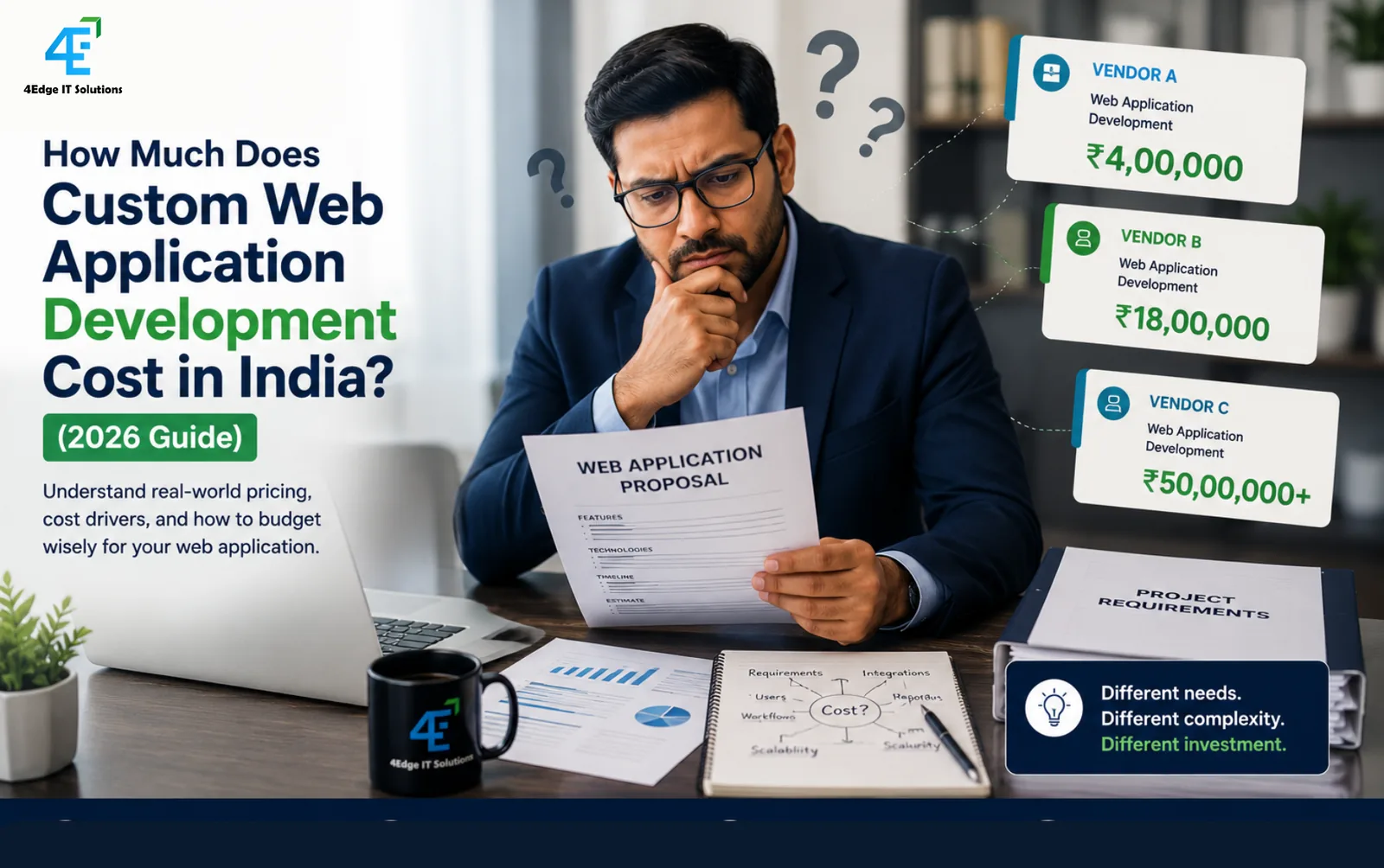
Don't select a company purely based on the lowest quotation.
Remember the adage: The devil is in the details?
A development partner might provide you with a very cheap quotation. Any client would tend to go for it without really understanding the underlying cost that might come across in future.
There is development cost and total cost of ownership.
A cheap proposal may exclude the cost of:
- Complete testing
- Security measures
- Deployment
- Documentation
- Backup
- Support
- Cost of third-party integration and/or tools
- Cloud server
… and many such hidden costs. One needs to be very cautious about such costs.
Another aspect is about how they estimate the project. Ask following questions about project estimation:
- What’s the basis for their estimation – is it some guestimate, based on past experience, or some other objective method?
- What is included (in scope), what is excluded (out of scope)?
- How do they handle the changes to the requirements?
- What are the assumptions made?
- Are the costs comparable with the competitors costs?
- Are there any other hidden costs?
If a company gives you the precise cost after just a few high-level discussions, you need to ask how did they arrive at that cost.
Try to get more details about the people who will actually build your application
The company who has given you the quotation may have a very good website and may be so is its management. Ask:
“Who will actually build my system?”
Try to understand:
- Their experience
- Their tech background
- If possible, the team structure
How are they going to handle the requirement changes?
Changes to requirements as the project progresses is an inevitable part of the project. We need to know to how to prioritise them in order to minimize the impact on the project especially the cost.
It is important to know how the partner handles it. Do they have a proper process for:
- Change management
- Impact analysis
- Effort re-estimation
- Overall change
A good development partner should be flexible in handling these changes.
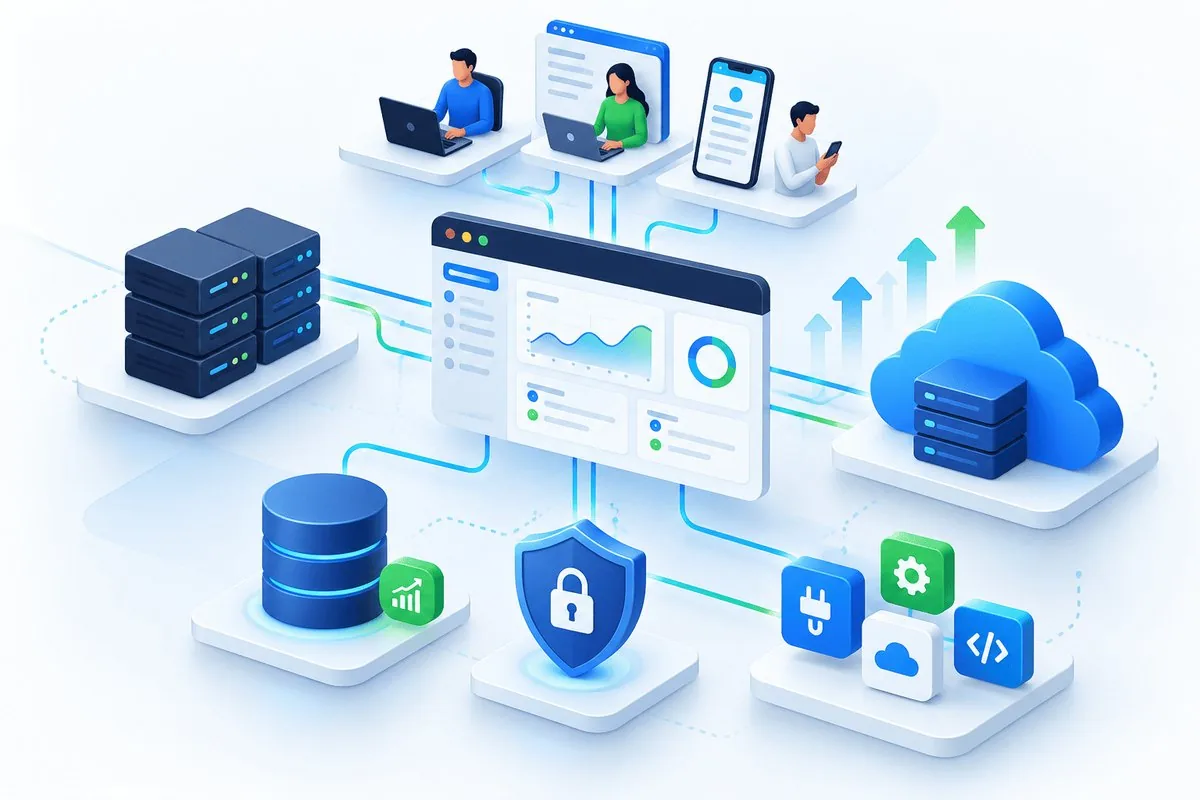
Understand the solution approach
Look at the overall solution architecture the partner is proposing. Following aspects can be discussed:
- Architecture
- Database
- Security
- Hosting
- Integration
- Scalability
Of course, there can be many more which can be discussed in due course.
It’s important to discuss the security aspects much before the development.
Few considerations:
Depending on the industry:
- Regulatory requirements
- PII (Personally Identifiable Information)
- Financial requirements / standards
- Employee / customer data
Next, post launch activities. Once the application goes live, it is not the end of the project.
Check about the post launch activities like:
- Bug fixes
- Warranty
- Support / SLA
- Security updates
- Enhancements
- Cloud Infrastructure management
A web application is a living system that you need constant focus on.
Make sure that you own the software and the data
Some of the aspects to be considered:
- Ownership of the source codes
- Intellectual property
- Database ownership
- Third-party licenses
- Access credentials
… to list a few.
Make sure that you are not under the control of the partner simply because they control the infrastructure or source code.
Is the partner simply the “yes boss” partner?
A partner who says yes to everything you say without questioning or suggesting the alternatives may not be a good partner. They should be in a position to say ‘no’ if certain requirements cannot be met and suggest alternatives in such cases.
How communicative is the partner?
Look for their communication interventions during the project (that they should mention in the proposal):
- Regular status updates (status reports)
- Intermittent demos / meetings
- Clear documentation
- Issue tracking
- Appropriate escalation mechanism
Remember, most software problems don't begin as technical problems. They often begin as communication problems.
Look for long-term, beyond the first project
A custom application may be used for 3 to 5 years or beyond. In that case, can the partner:
- Support the application for so long?
- Keep fixing the bugs (if any) or enhance it with new features?
- Integrate it with some new systems?
- Will the team still be available even if the original developers move on?
There is a difference between long-term partnership vs. one-time outsourcing which is an important distinction.
Conclusion
Any partner can build custom applications. But my perspective is that (based on my past experiences), choosing a development partner company is less about finding the company with some technology expertise; it’s more about finding the team that understands your business, asks the right questions at the right time, challenges assumptions when necessary, communicates openly and takes responsibility for the outcome.

Related reading: Choosing a Game-Based Learning Development Company in India: 8 Questions to Ask • 4Edge case studies
Planning a custom web application? Explore our custom web and mobile development services or talk to the 4Edge team.
Frequently Asked Questions
How do I choose the right custom web application development partner?
Look beyond technical skills. A good partner understands your business and domain, explains how they estimated the cost, tells you who will actually build the system, has a clear process for requirement changes, discusses security and architecture early, communicates regularly, gives you ownership of the code and data, and can support the application for years.
Why shouldn’t I choose the development company with the lowest quotation?
A cheap quotation often leaves out testing, security, deployment, documentation, backups, support, third-party tools and cloud servers. Compare the total cost of ownership, not just the development cost, and ask what is in and out of scope.
What questions should I ask about a web application project estimate?
Ask what the estimate is based on, what is included and excluded, how requirement changes are handled, which assumptions were made, how the cost compares with competitors and whether there are any hidden costs.
Who should own the source code and data of a custom web application?
You should. Before signing, make sure the agreement covers ownership of the source code, intellectual property, the database, third-party licences and all access credentials, so you are never locked in to the partner.
What security aspects should be discussed before development starts?
Discuss user authentication, role-based access control, data privacy, encryption, audit trails, session management and backups. Depending on your industry, also cover regulatory requirements, personal data (PII), financial standards and employee or customer data — in India, this includes the Digital Personal Data Protection (DPDP) Act.
What support should a development partner provide after the application goes live?
Go-live is not the end of the project. Check for bug fixes, a warranty period, support with a clear SLA, security updates, enhancements and cloud infrastructure management, since a custom application is typically used for three to five years or more.
About the author
4Edge Engineering TeamChief Technology Officer
Heads engineering at 4Edge IT Solutions, delivering custom web and mobile applications, API integrations and Odoo ERP implementations for growing businesses.