Custom web application development costs in India generally range from Rs 3 lakhs for simple internal applications to Rs 50 lakhs or more for enterprise-grade platforms. The biggest cost drivers include workflow complexity, integrations, reporting requirements, user roles, security expectations, and scalability needs.
Expert Perspective from 4Edge IT Solutions
Businesses often focus on development hours when estimating software costs. In reality, the largest pricing variables are the complexity of business workflows, the number of systems requiring integration, and the level of flexibility needed to support future growth.
Organizations that invest time in requirement discovery typically receive more accurate estimates and experience fewer budget overruns.
Key Takeaways
- Custom web application costs in India vary based on business complexity, not just features.
- Internal applications typically require lower investment than enterprise platforms.
- Integrations and reporting requirements significantly influence pricing.
- Discovery and planning improve budget accuracy.
- Evaluating long-term operational value is more important than selecting the lowest quote.
- Project estimation frameworks help businesses avoid costly surprises during implementation.
The same question was asked to software vendors by three companies: What is the price of our web app? One got an offer of Rs 4 lakh. Another was quoted close to Rs 18 lakhs. The third was told to budget Rs 50 lakh or more.
They were not being overcharged. They were not all building the same thing.
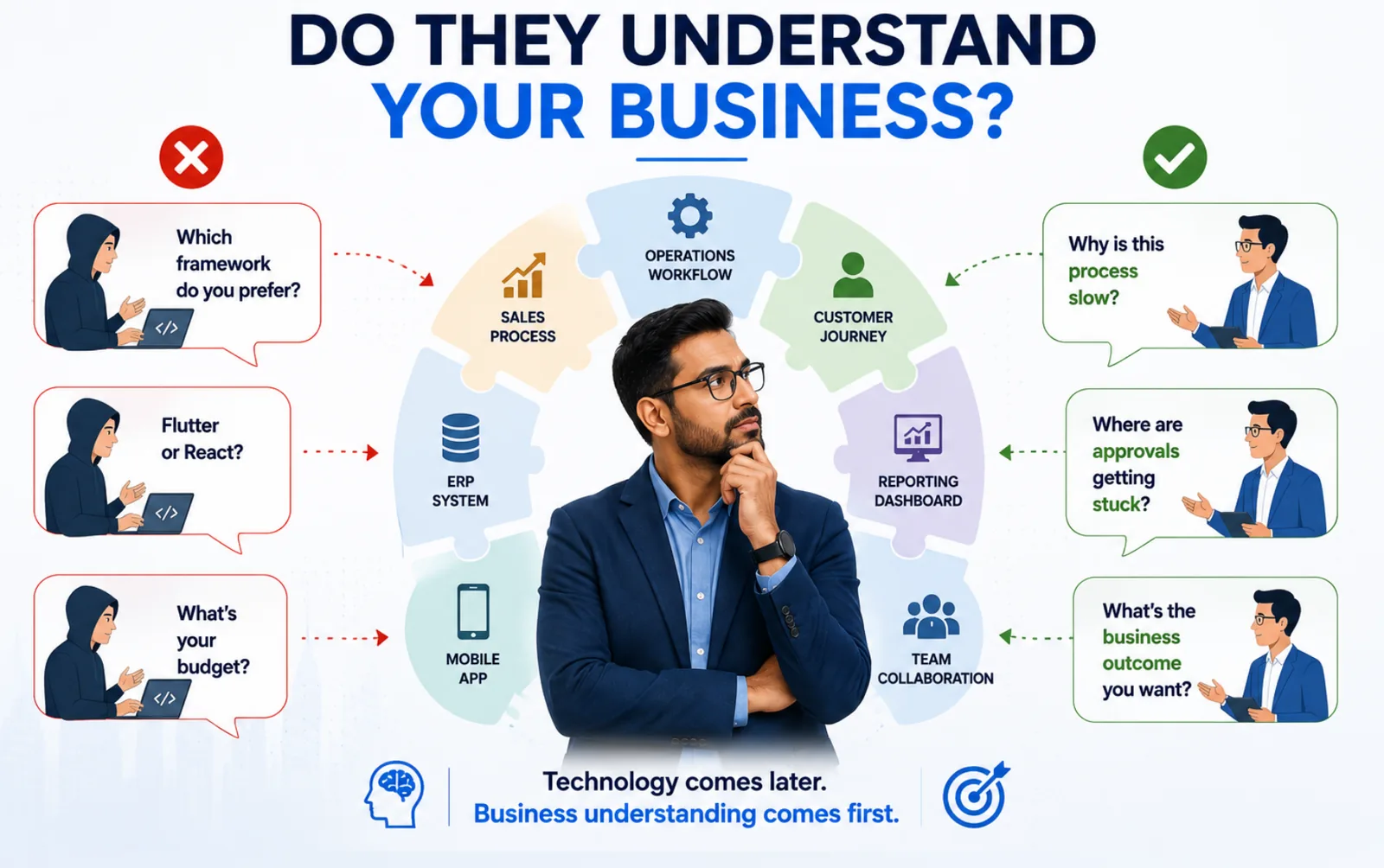
A custom web application is not a product on the shelf. It is a business asset created around how an organization operates, provides value to customers, conducts operations, and grows over time.
If you are looking at a workflow automation platform, customer portal, internal operations system, partner platform, or enterprise application, this guide will help you understand what drives development costs in India and how to budget wisely in 2026.
The Quick Answer: What Does It Cost?
Let's start with the number everyone is searching for.
Typical Investment Ranges in India (2026)
| Type of Application | Typical Investment |
|---|---|
| Internal Business Applications | Rs 3-7 Lakhs |
| Workflow Automation Systems | Rs 5-12 Lakhs |
| Customer Portals | Rs 8-18 Lakhs |
| Enterprise Applications | Rs 15-35 Lakhs |
| Multi-Tenant SaaS Platforms | Rs 25-60+ Lakhs |
| Highly Complex Enterprise Ecosystems | Rs 50 Lakhs+ |
These are indicative ranges. The final investment depends on complexity, workflows, integrations, reporting requirements, and future scalability.
Why Do Similar Applications Have Completely Different Costs?
Say you are building two houses. Both have three bedrooms, but one needs premium materials, smart automation, custom interiors, and earthquake-resistant foundations while the other follows a standard blueprint. The same principle applies to software.
One company may ask for a web application and another may require a complex operational platform. It is not the name that counts. The cost is in the details.
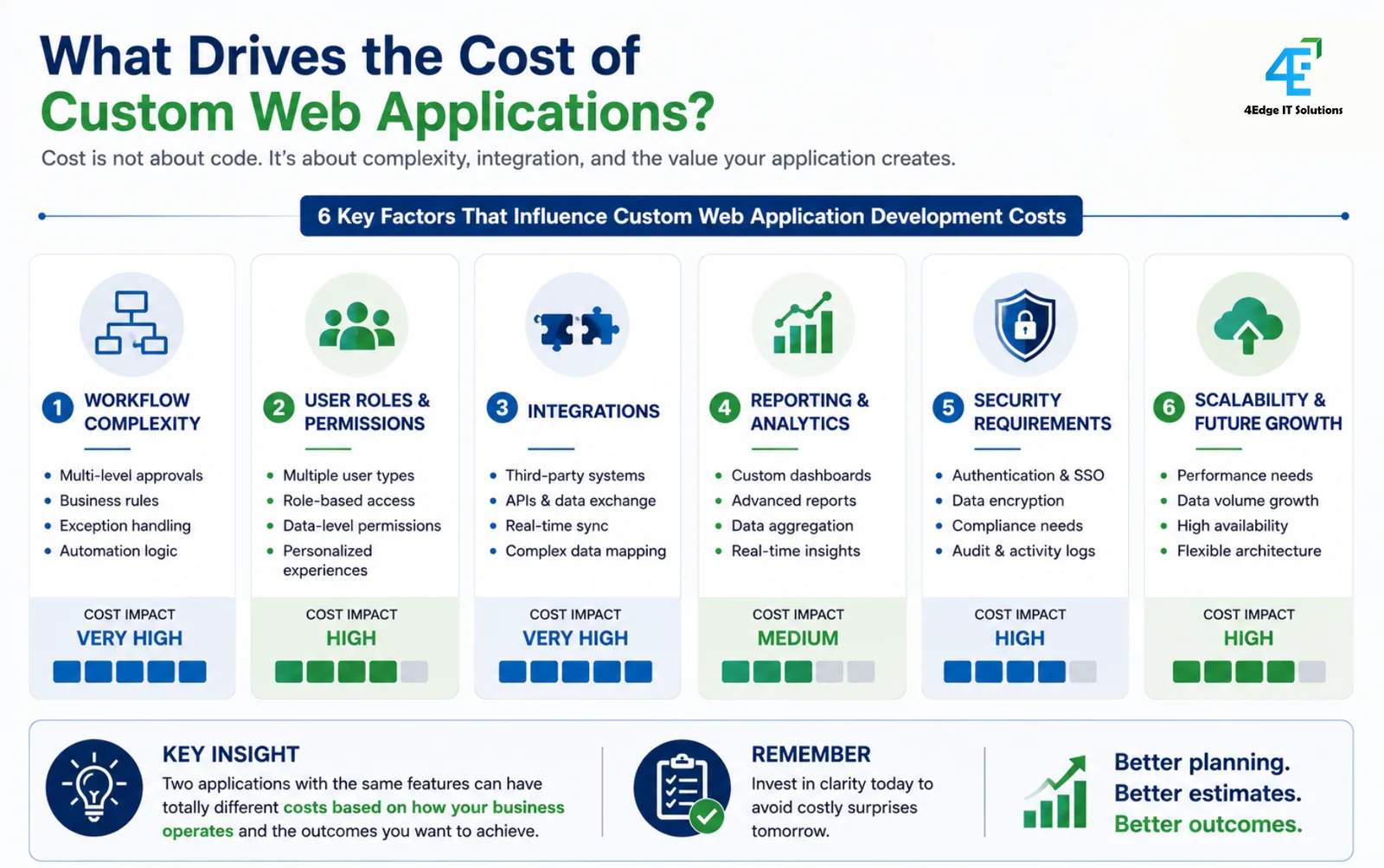
The Five Factors That Influence Development Costs
1. What Are You Actually Building?
A simple leave approval tool differs significantly from an enterprise platform used across departments.
| Project Type | Example | Cost Impact |
|---|---|---|
| Simple Internal Tool | Leave approvals | Low |
| Workflow Platform | Procurement automation | Medium |
| Customer Portal | Self-service dashboards | High |
| Enterprise Platform | Multi-department operations | Very High |
| SaaS Product | Paying customers | Highest |
Complexity drives effort. Effort drives investment.
2. Users Add More Than Numbers
Many businesses think: We only have 500 users. The actual question is: How many types of users do you have?
Employees, managers, administrators, customers, partners, and vendors may each require unique experiences, permissions, workflows, dashboards, and reports. That complexity shapes the project.
3. Integrations Change Everything
Modern businesses do not operate using one system. Your application may need to connect with:
- ERP systems
- CRM platforms
- HRMS solutions
- Accounting software
- Payment gateways
- Learning platforms
- Email providers
- SMS services
Integrations often determine whether a project stays straightforward or becomes significantly more sophisticated.
What Most Businesses Get Wrong
Most organizations assume development costs are driven by the number of screens. They are not. The expensive part is not designing a beautiful dashboard. It is enabling software to mirror the realities of your business.
A simple-looking approval button may involve:
- Approval hierarchies
- Business rules
- Notifications
- Escalations
- Exception handling
- Audit logs
- Compliance controls
- Integrations
Software becomes expensive when it starts behaving like your organization. That is often where the real value lies.
Scenario: The Growing Manufacturer
A mid-sized manufacturer wanted to digitize internal approvals. Leadership initially allocated Rs 4 lakhs. On paper, the requirement sounded simple.
After discovery sessions, however, they uncovered additional needs:
- Plant-wise permissions
- Vendor onboarding workflows
- Mobile approvals
- ERP integration
- Escalation rules
- Audit trails
The project evolved from a form-based application into a business operations platform. The cost increased, but so did the value. The objective was not to build software. It was to eliminate inefficiencies that had been slowing the business for years.
Where Does the Investment Go?
One of the biggest misconceptions is that all software budgets disappear into coding. A successful application requires much more.
| Project Phase | Typical Share of Investment |
|---|---|
| Discovery & Planning | 10-15% |
| UX & Interface Design | 10-15% |
| Development | 45-55% |
| Integrations | 5-15% |
| Testing & Quality Assurance | 10-15% |
| Deployment & Go-Live | 3-5% |
Businesses that skip discovery often spend more later fixing avoidable mistakes.
The Hidden Costs Nobody Talks About
The price on a proposal is not always the true cost of software. Some expenses never appear on invoices.
- Manual Workarounds: Teams compensate for limitations using spreadsheets and duplicate entries.
- Slow Decision-Making: Poor reporting delays action.
- Vendor Lock-In: Future changes become expensive.
- User Resistance: Employees avoid systems that complicate work.
- Subscription Creep: Small monthly costs accumulate significantly over time.
The cheapest option is not always the lowest-cost option over three years. Businesses rarely regret investing in systems that support growth. They often regret delaying investments while inefficiencies compound.
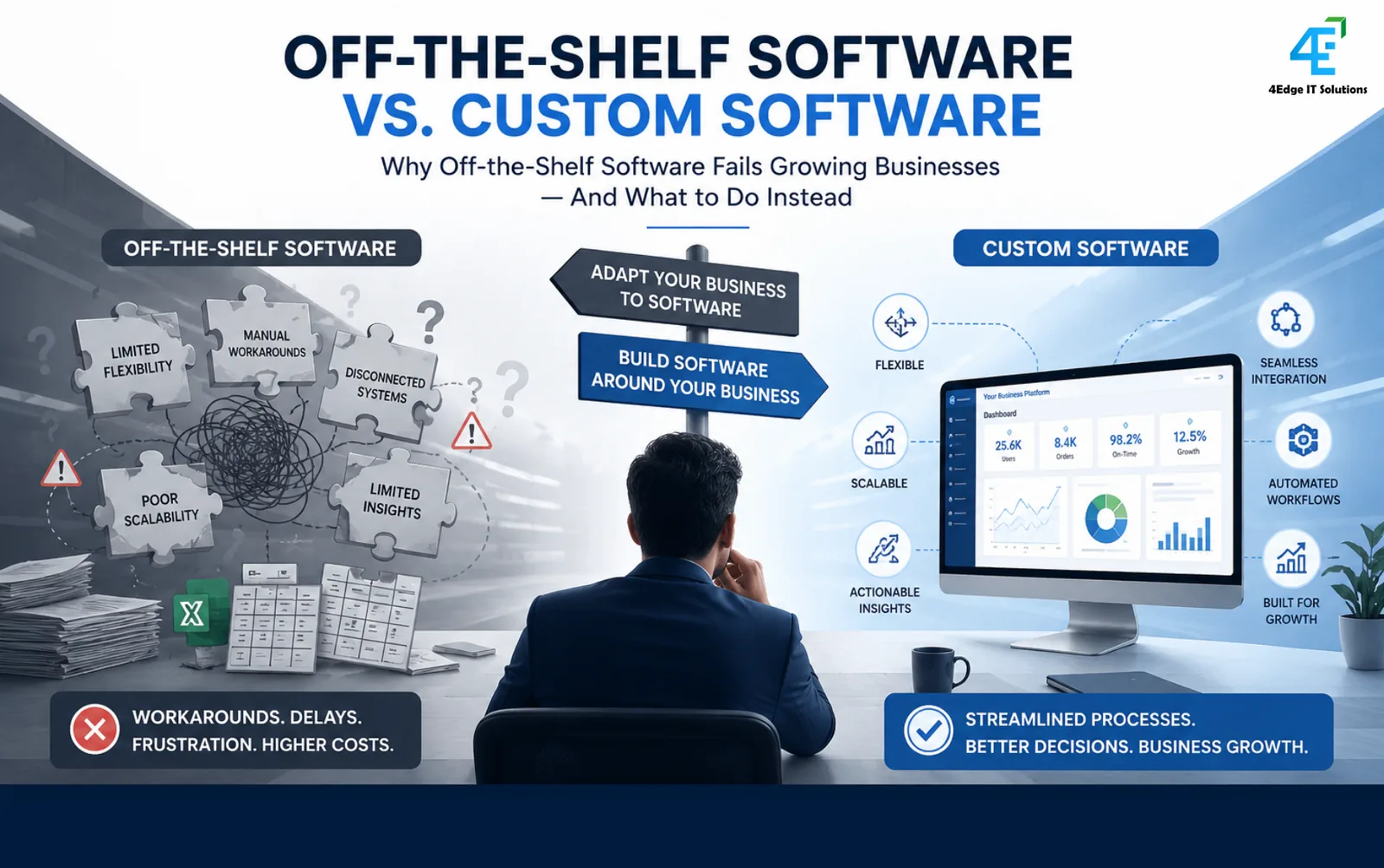
Custom Software vs Off-the-Shelf: Which Costs More?
The answer depends on the time horizon.
| Consideration | Off-the-Shelf Software | Custom Applications |
|---|---|---|
| Upfront Investment | Lower | Higher |
| Subscription Fees | Recurring | Minimal |
| Workflow Fit | Limited | High |
| Flexibility | Vendor-defined | Business-defined |
| Integrations | Restricted | Tailored |
| Long-Term Control | Limited | Greater |
| Scalability | Vendor roadmap | Designed around growth |
Looking only at Year One costs often leads to poor decisions. Evaluate the entire lifecycle.
Should You Build Now?
Before seeking proposals, ask yourself:
| Question | If Yes | If No |
|---|---|---|
| Are employees relying on spreadsheets? | Explore automation | Monitor |
| Are disconnected systems slowing work? | Consider custom solutions | Optimize current tools |
| Are reporting gaps affecting decisions? | Prioritize improvements | Reassess later |
| Is growth exposing process inefficiencies? | Build evaluation | Review annually |
| Are software limitations frustrating teams? | Investigate alternatives | Continue monitoring |
If you answered yes multiple times, it may be time to explore custom development.
How to Budget More Accurately
The businesses that receive the most reliable estimates do not necessarily have larger budgets. They have clearer requirements.
Before speaking with vendors, define:
- What problem are we solving?
- Who will use the system?
- Which workflows matter most?
- What systems need to integrate?
- What reports are essential?
- How should this evolve over the next three years?
Clarity reduces surprises.
How 4Edge Approaches Custom Applications
At 4Edge IT Solutions, we believe applications should be built around how businesses actually operate, not the other way around.
Our approach focuses on understanding workflows before recommending technology. We work with organizations to uncover bottlenecks, identify opportunities for automation, and design systems capable of supporting future growth.
Software is not successful simply because it launches. It is successful when people use it, operations improve, and the business moves faster.
Before You Request a Proposal
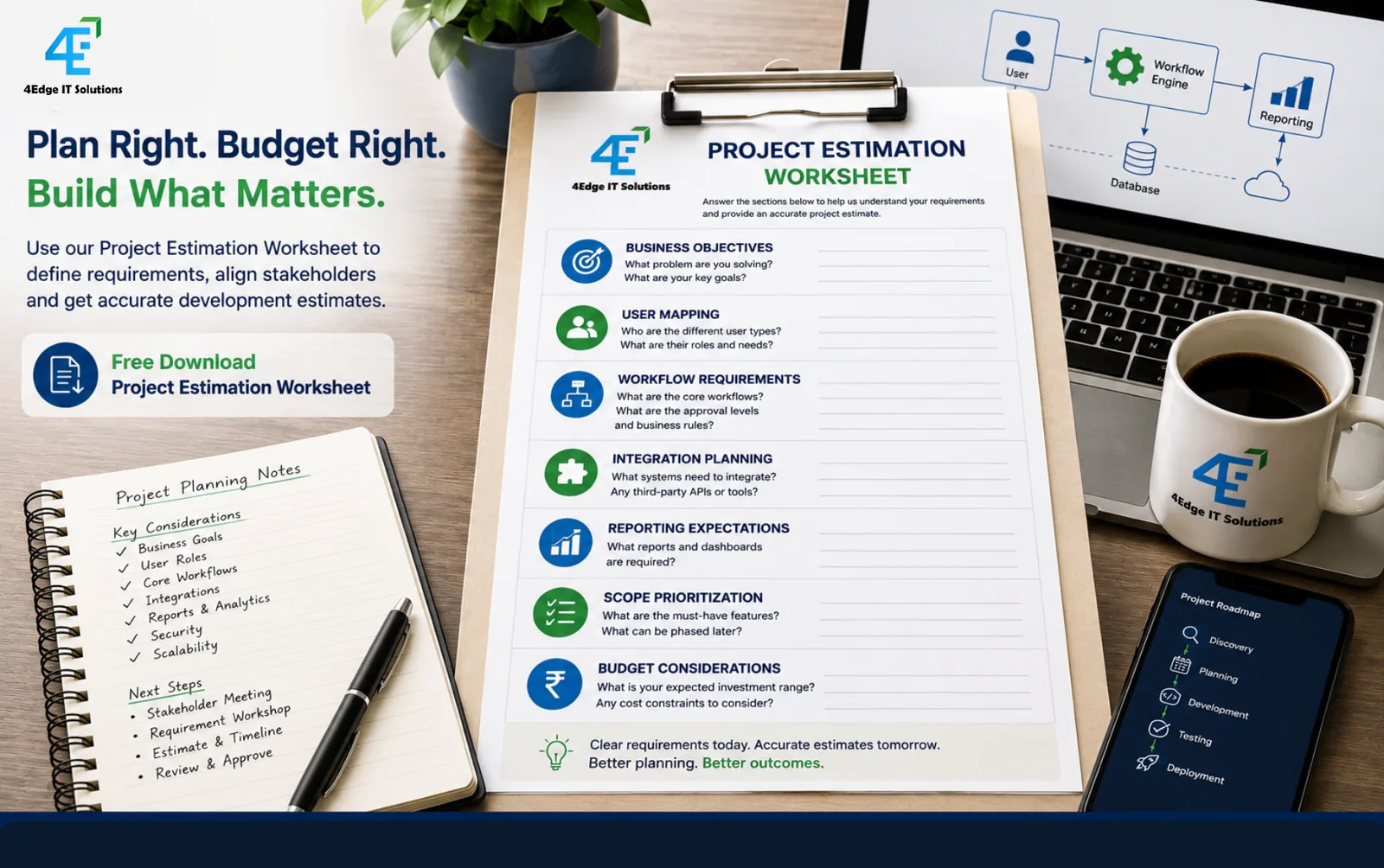
By now, you probably have a rough estimate forming in your mind. But one exercise can save weeks of rework and unexpected budget revisions. That is why we created the Project Estimation Worksheet.
It helps you define:
- Who will use the application
- What processes should be automated
- Which integrations are essential
- How success should be measured
- What future growth might look like
The result is better conversations, more accurate estimates, and smarter decisions.
Free Download: Project Estimation Worksheet
A practical planning tool designed for business leaders preparing for custom software initiatives.
Included Inside
| You'll Be Able To Define | Why It Matters |
|---|---|
| Business Objectives | Align technology with outcomes |
| User Mapping | Understand stakeholders |
| Workflow Requirements | Clarify operational needs |
| Integration Planning | Avoid surprises later |
| Reporting Expectations | Support decision-making |
| Scope Prioritization | Focus on what matters most |
| Budget Considerations | Improve estimation accuracy |
Download the worksheet and approach your next software initiative with confidence.
Frequently Asked Questions
How much does custom web application development cost in India?
Most projects fall between Rs 3 lakhs and Rs 35 lakhs, while highly complex enterprise applications can exceed Rs 50 lakhs.
Why do vendor estimates differ so much?
Because project complexity, integrations, user roles, security requirements, and reporting expectations vary significantly.
How long does development typically take?
Smaller projects may take 8-12 weeks, while enterprise applications often require several months.
Is custom software suitable for smaller businesses?
Yes, particularly when operational inefficiencies, manual work, or growth constraints justify the investment.
Can custom applications integrate with our existing systems?
Yes. Integrations with ERP, CRM, HRMS, LMS, accounting software, and third-party services are common.
Software budgets are seldom technology decisions. They are business decisions. The cheapest quote is not always the best investment.
The better question is not simply: What is the cost of this app? The better question is: What's the cost of continuing to operate without it?
About the author
4Edge Engineering TeamChief Technology Officer
Heads engineering at 4Edge IT Solutions, delivering custom web and mobile applications, API integrations and Odoo ERP implementations for growing businesses.