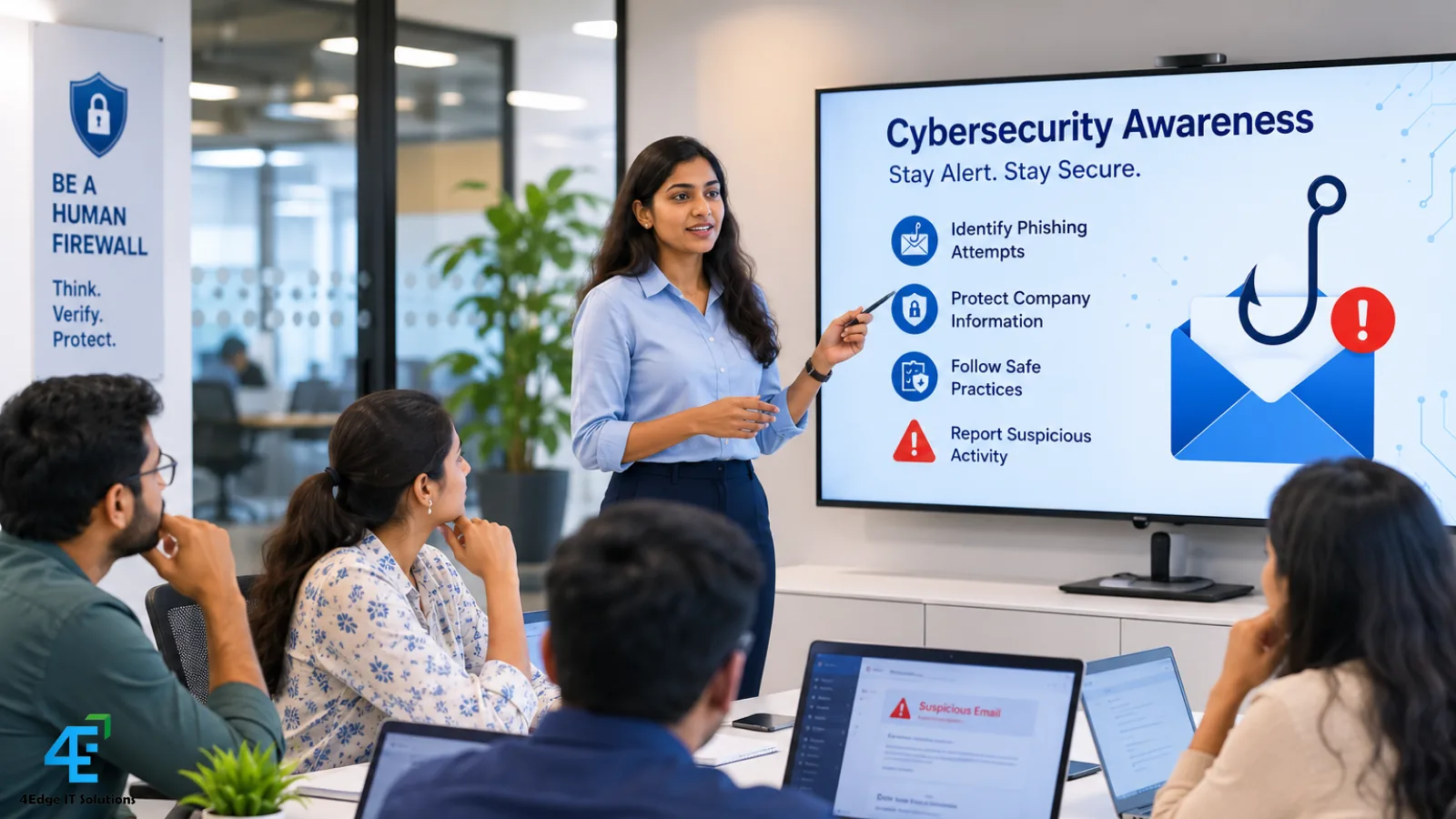
Your company has purchased firewalls.
You have antivirus, email filtering, multi-factor authentication and regular backups.
But one employee clicks on what looks like an invoice from a trusted supplier.
Bad actors gain access to sensitive information, compromise business accounts and disrupt operations in minutes.
Nothing out of the ordinary.
In fact, phishing remains one of the most successful ways of attacking someone online. Attackers don’t go after systems first anymore, they go after people.
Cybersecurity is no longer just an IT concern. Every employee that logs into an email, cloud application or handles business information has become part of the organization’s security perimeter.
This is why cybersecurity awareness training has evolved from a compliance exercise to a business imperative.
Why Phishing Still Works
Attackers have become more sophisticated.
Modern phishing emails are no longer filled with spelling mistakes or suspicious links.
Many use:
- AI-generated writing
- Company branding
- Fake invoices
- HR notifications
- Courier updates
- Banking alerts
- Executive impersonation
Some attacks even reference real suppliers or ongoing business conversations.
The objective is simple:
Create urgency before the employee has time to think.
The Human Firewall Is Still the Weakest Link
Organizations often invest heavily in technology while overlooking employee behaviour.
The result?
| Technology Can… | Employees Still Need To… |
|---|---|
| Block known threats | Identify suspicious emails |
| Detect malware | Verify unusual requests |
| Monitor networks | Protect passwords |
| Encrypt data | Report incidents quickly |
| Restrict access | Handle information responsibly |
Technology reduces risk.
Employees determine whether an attack succeeds.
Why Traditional Awareness Training Falls Short
Many organizations still conduct cybersecurity awareness once a year.
Employees attend a presentation.
Complete a quiz.
Receive a certificate.
Then return to work.
Months later, when a realistic phishing email arrives, most of the information has already been forgotten.
Awareness isn't created through a single session.
It develops through continuous learning, regular reinforcement, and practical experience.
A Quick Cybersecurity Health Check
Ask yourself these questions.
| Question | Yes | No |
|---|---|---|
| Have employees received cybersecurity awareness training in the past 12 months? | ☐ | ☐ |
| Do employees know how to report suspicious emails? | ☐ | ☐ |
| Have phishing simulations been conducted? | ☐ | ☐ |
| Is security awareness part of new employee onboarding? | ☐ | ☐ |
| Are remote employees included in awareness programs? | ☐ | ☐ |
If you answered "No" to two or more questions, your organization has opportunities to strengthen its human cybersecurity defenses.
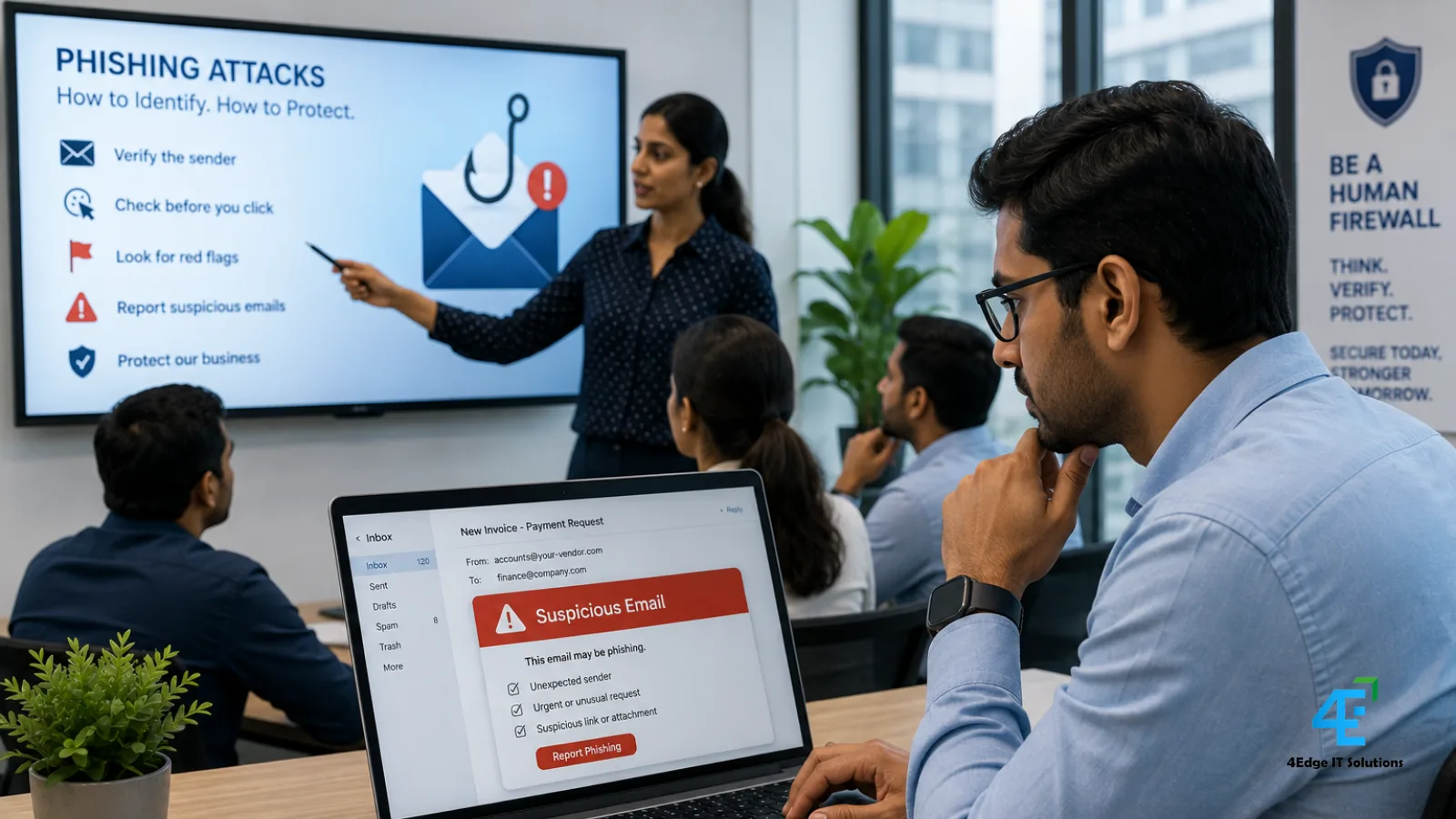
Beyond Phishing: What Employees Should Recognize
Modern awareness programs cover far more than suspicious emails.
Employees should understand how to identify and respond to:
| Threat | Business Impact |
|---|---|
| Phishing Emails | Credential theft |
| Business Email Compromise | Financial fraud |
| Ransomware | Operational disruption |
| Social Engineering | Unauthorized access |
| Weak Passwords | Account compromise |
| Unsafe USB Devices | Malware infection |
| Public Wi-Fi Risks | Data interception |
| Insider Threats | Information leakage |
Cybersecurity awareness is about recognizing everyday risks—not turning employees into security experts.
4Edge Insight
The goal of awareness training isn't to make every employee an IT specialist.
It's to help them pause, question, and verify before taking action.
That single habit can prevent incidents that technology alone may not stop.
What Effective Cybersecurity Awareness Looks Like
The most successful organizations treat awareness as an ongoing program rather than an annual event.
A modern awareness strategy typically includes:
Awareness Sessions
Simple, role-based learning focused on real business scenarios.
Phishing Simulations
Controlled exercises that help employees recognize suspicious emails without real-world consequences.
Microlearning
Short, engaging modules that reinforce security practices throughout the year.
Department-Specific Training
Finance teams face different threats than HR, Sales, or IT.
Training should reflect those differences.
Continuous Reinforcement
Monthly reminders, short quizzes, posters, newsletters, and awareness campaigns keep cybersecurity top of mind.
Example
A finance employee receives an email appearing to come from the Managing Director requesting an urgent vendor payment.
Everything looks legitimate.
The email signature matches.
The tone feels authentic.
The request seems time-sensitive.
Without awareness training, the employee processes the payment.
With awareness training, the employee pauses, verifies the request through another communication channel, and discovers it was a phishing attempt.
The technology didn't stop the attack.
An informed employee did.
Building a Security-First Culture
Cybersecurity shouldn't only be discussed after an incident.
Organizations that build resilient teams encourage employees to:
- Report suspicious activity without fear.
- Verify unusual requests.
- Protect business information.
- Share security concerns early.
- Treat cybersecurity as part of everyday work.
When security becomes part of workplace culture, employees become an active line of defense rather than the weakest link.
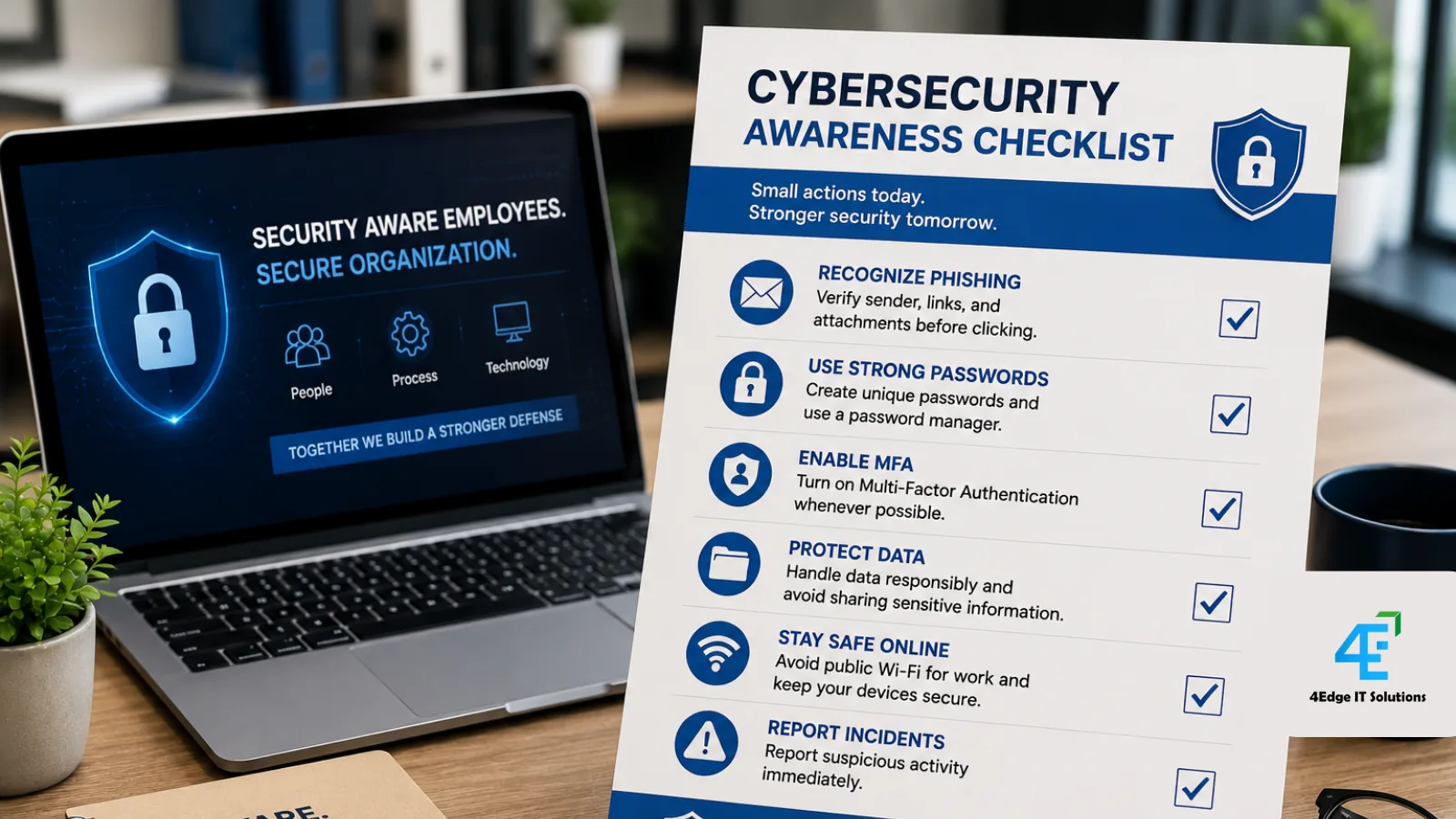
Employee Cybersecurity Checklist
Use this checklist to evaluate your current awareness program.
✅ Annual awareness training completed
✅ Phishing simulations conducted
✅ New employees trained during onboarding
✅ Password best practices communicated
✅ Incident reporting process defined
✅ Remote workforce included
✅ Regular awareness campaigns scheduled
Every checked box strengthens your organization's resilience against evolving cyber threats.
Download the Cybersecurity Awareness Checklist
You don’t need fancy technology to prepare employees – it starts with basic direction.
Our Cybersecurity Awareness Checklist is designed to help organizations review their current awareness practices and identify areas for improvement.
The toolkit includes:
- Cybersecurity Awareness Checklist
- Phishing Response Guide
- Employee Security Best Practices
- Password Security Guide
- Incident Reporting Checklist
- Awareness Program Planner
Frequently Asked Questions
Why is cybersecurity awareness training important?
Cybersecurity awareness training helps employees recognize phishing attempts, social engineering, password risks, and other cyber threats, reducing the likelihood of security incidents caused by human error.
How often should employees receive cybersecurity awareness training?
Awareness should be continuous. Organizations should combine annual training with regular microlearning, phishing simulations, newsletters, and periodic refresher sessions.
Is phishing still the biggest cyber threat?
Phishing remains one of the most common attack methods because it targets people rather than technology and continues to evolve using AI-generated content and sophisticated impersonation techniques.
Who should receive cybersecurity awareness training?
Everyone—from senior leadership to new employees—should receive role-appropriate cybersecurity awareness training, as every user interacts with business systems and data.
What should a cybersecurity awareness program include?
An effective program should include phishing awareness, password security, social engineering, safe browsing, incident reporting, data protection, and ongoing reinforcement through practical exercises.
Cyber threats continue to evolve, but one fact remains unchanged:
Attackers look for the easiest point of entry.
More often than not, that point is a human decision—not a technical vulnerability.
Organizations that invest in cybersecurity awareness create employees who are better prepared to recognize threats, protect sensitive information, and respond confidently when something doesn't seem right.
In today's digital workplace, cybersecurity isn't just about stronger technology.
It's about building smarter, security-aware people.
Primary sources
- Indian Computer Emergency Response Team (CERT-In) (CERT-In, Ministry of Electronics and Information Technology)
- Digital Personal Data Protection Act, 2023 and DPDP Rules, 2025 (Ministry of Electronics and Information Technology (MeitY))
About the author
4Edge Compliance TeamCompliance Training Specialist
Designs compliance training programs at 4Edge IT Solutions covering POSH, the DPDP Act, cybersecurity awareness, ISO and SOC 2 readiness, and workplace ethics for Indian organisations.